City of Detroit III: The Legendary Steamship Reimagined
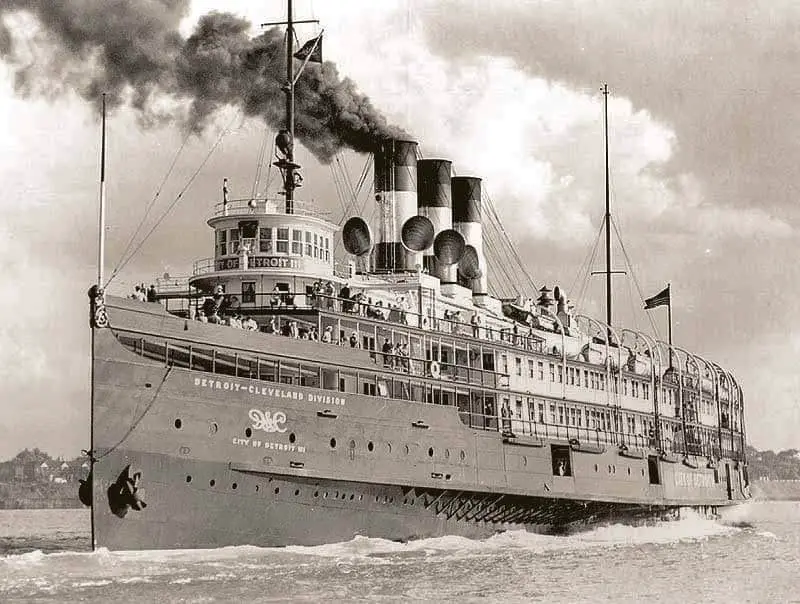
This post covers the steamship City of Detroit III, a large and elegant paddlewheel ship that sailed the Great Lakes in the early 1900s. It was known for its design, luxurious interiors, and the experience it offered to travelers beyond simple transportation.
A Great Lakes Giant

Built in 1911 and designed by Frank E. Kirby, the City of Detroit III was part of the Detroit & Cleveland Steamboat Line. It was the largest paddlewheel ship on the Great Lakes at its time and carried up to 2,000 passengers. The ship was notable for its iron hull and impressive size, standing more than 50 feet tall with a hull length of 455 feet.
Elegant Interiors and Amenities
The ship was outfitted with stylish features designed to offer a comfortable and memorable experience. Highlights included the Gothic Room, a men's lounge with stained-glass windows and fireplaces, and a large dining salon. There were 25 parlor staterooms with private bathrooms and verandas, plus many smaller rooms for overnight travelers.

Art and Atmosphere on Board
The Grand Salon was the heart of the ship, decorated with oak paneling and murals by artist William de Leftwich Dodge. A notable mural showed a Siren with Pan, inspired by Audrey Munson, a famous model of the time. The ship also featured sculptures, paintings, and detailed light fixtures that added to its charm.

Key Features at a Glance
- Largest paddlewheel steamship on the Great Lakes when built.
- Luxurious public spaces like the Gothic Room and Palm Court.
- First iron-hulled ship on the Great Lakes with electric lighting.
- Over 500 staterooms, including parlor rooms with private baths and verandas.
- Art-filled interiors with murals, stained glass, sculptures, and elaborate light fixtures.
The City of Detroit III stood out as an example of how steamship travel evolved into a high-end leisure experience during its era. Its blend of size, comfort, and artistic design made it a favorite for travelers on the Great Lakes. The ship’s story shows a time when travel was about more than reaching a destination—it was about enjoying the trip itself.
See more of this story at Michigan4You.com.


Comments
Post a Comment