The USS Michigan - A Technological Marvel Patrolling the Great Lakes in 1844
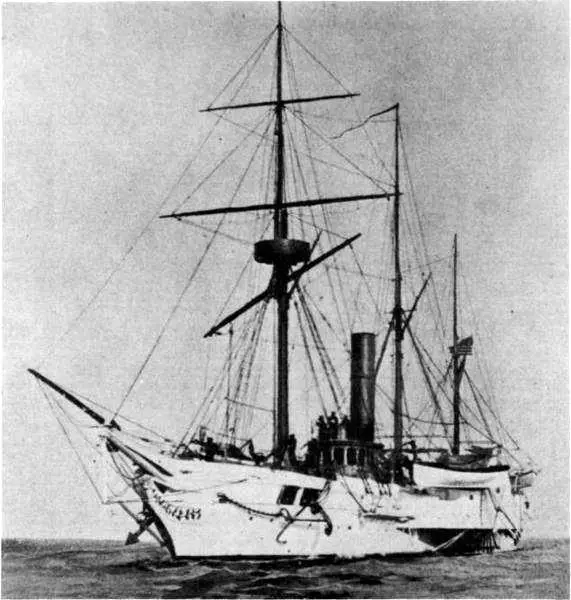
1844: The Inception of the First USS Michigan on the Great Lakes
The USS Michigan, the United States Navy's maiden iron-hulled warship, was commissioned in August 1844. This vessel was not only a naval force but also a technical experiment, as it was the Navy's first attempt to use iron hulls and incorporate new construction techniques. The ship, built in Pittsburgh and reassembled in Erie, Pennsylvania, was 167 feet long, displaced 450 tons, and powered by side paddlers and sails.The USS Michigan was a grand naval spectacle on the Great Lakes, serving for sixty-eight years, marking the third-longest active service of any Navy vessel. Her primary duty was to patrol the extensive U.S. border with Canada, stretching from Niagara to Duluth. Throughout her service, the USS Michigan rescued numerous ships and hundreds of sailors, enforced law and order across the upper Great Lakes, and recruited thousands of sailors for the Navy.
Constructing the USS Michigan - The Forefront of Naval Technology
The 1837 Canadian Rebellion saw rebels on the Canadian side of the Great Lakes launching attacks. As a response, the British armed two steam-powered gunboats to defend their side of the lake. Seeing this, the United States recognized the need for an advanced U.S. gunboat of its own on the lakes, leading to the commissioning of the USS Michigan.The ship boasted a steam-powered sidewheel as its powerplant, and in line with early steamers, the USS Michigan also had three masts for wind power to supplement the steam engine. This combination was crucial to extend the ship's travel range and ensure maneuverability in case of a steam engine failure. The vessel could reach a speed of 12 knots, a remarkable rate for the time, and had a crew of 88 officers and men.
Action on Beaver Island
In 1851, United States District Attorney George Bates sought to arrest King James Strang on Beaver Island and called upon the USS Michigan for support. The Mormons had installed cannons on a ship stranded in the harbor. However, the arrival of the USS Michigan, with its intimidating black hull, powerful eight-inch battery, and full complement of Marines, ensured that there was no resistance to the federal arrest warrants.The Timber Rebellion
In 1853, the USS Michigan was tasked with halting massive timber thefts from federal land along Lake Michigan. The national government owned a significant amount of heavily forested land in the western Great Lakes region, including areas in Wisconsin, Illinois, Michigan, and Minnesota. This timber was valuable for constructing U.S. warships.A group of criminals, known as Timber Pirates, saw the government-owned wood stockpiles as an opportunity for easy profit. These pirates aimed to steal and smuggle the wood to sell elsewhere. The USS Michigan and her crew successfully captured several of these timber pirates, who were then sent to Detroit for trial.
Collision with the Buffalo
On May 5, 1853, the USS Michigan collided with the largest steam-powered timber ship on the Great Lakes, the Buffalo. Despite the significant damage to both ships, they were able to continue sailing. Commander Bigelow of the USS Michigan, infuriated by the seemingly intentional collision, pursued the Buffalo. After ensuring that the Buffalo's crew needed no assistance, he followed the ship back to Chicago, where the USS Michigan underwent two weeks of repairs.Murder on Beaver Island
On June 16, 1856, while the USS Michigan was moored at Beaver Island Harbor, two dissenting Strangites assassinated their "king," James Strang, on the pier in front of the ship. After the murder, the killers surrendered to the Michigan's captain, who handed them over to the sheriff at Mackinaw Island. However, the men were never convicted.Civil War Service
During the first two years of the Civil War, the USS Michigan enlisted four thousand sailors for the Union Navy during her tours of Great Lakes ports. In 1863, amid rumors of Confederate plots to invade the North from Canada, the Navy increased Michigan's armament to fourteen cannons, including six powerful Parrott rifles. Despite two unsuccessful attempts by Confederate agents to seize her and release prisoners, no Confederate force ever came within range of her guns.Final Years as A Training Ship
In 1905, the USS Michigan was renamed the USS Wolverine and remained in service as a training vessel until 1923. One of her last acts as an active warship was in 1901 when she was dispatched to Buffalo after President McKinley's assassination due to fears of rioting. The Wolverine achieved a record speed of 14 knots during this voyage.The Final Days of the USS Wolverine
When a new battleship, the USS Michigan, was commissioned in 1905, the old ship was renamed the USS Wolverine. The Wolverine had the honor of towing the recreated Niagara across the Great Lakes during the 1913 Centenary commemoration of the Battle of Lake Erie.On May 6, 1912, the USS Wolverine was decommissioned and transferred to the Pennsylvania Naval Militia. She served for 11 years, undertaking summer training voyages for the US Naval Reserve. In 1923, mechanical failure doomed the ship, and it was moored on a sandbar in Misery Bay in Erie. Despite pleas from former President Franklin Delano Roosevelt, the USS Wolverine was scrapped in 1949. However, her prow was saved and displayed on State Street in Erie, and later relocated to the Erie Maritime Museum, where it remains today.
https://michigan4you.com/uss-michigan/?fsp_sid=23"


Comments
Post a Comment